
Most UK properties have three main plumbing and drainage systems: the drinking water supply, foul water drainage or sewage plus rainwater drainage. Wastewater pipes (from sinks, baths and showers) join larger waste pipes linked to an upright soil stack (often outside), which funnels everything into a main underground drainage pipe, ultimately joining the public sewer network or, in some cases, a private system.
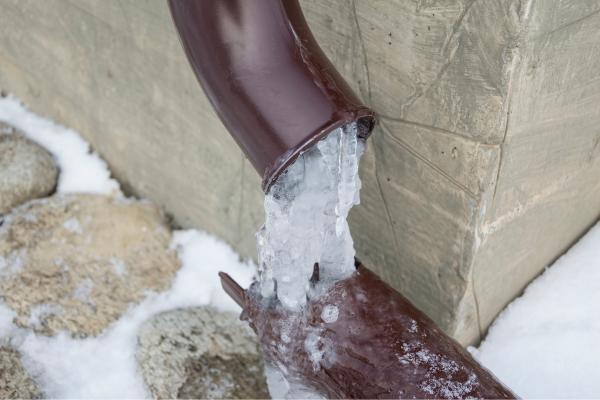
Drains freeze when cold weather causes water in waste pipes (particularly those outside in exposed areas or in spots which aren’t insulated) to freeze and expand. This leads to ice blockages, which either slow or completely impede the flow of water.
Crucially, with frozen drains, the flow is typically slow, unlike with supply pipes, where water is completely stopped. Because drains use gravity, some fluid will still trickle through.
How does winter make things worse?
Winter places significant pressure on drainage systems and can highlight concealed weaknesses in pipework and underground drainage. What’s more, these issues may become apparent suddenly and deteriorate rapidly.
Freezing and expansion of pipes can cause cracks and fractures or complete bursting. Additionally, in colder conditions, leaves, fat and similar debris harden, limiting flow and making internal flooding more likely.
Equally, frozen gullies and manholes may stop drainage of surface water, frequently resulting in pooling liquid and property damage.
When snow or ice melt quickly, particularly if a drainage system hasn’t been properly maintained, large volumes of liquid may overwhelm already stressed pipework. Water can’t go anywhere in damaged or blocked drains, so flooding may result. Plus, if there is sudden pressure, collapsed or weakened pipes may fail.
Frozen pipes and drains: key differences
In cold conditions, domestic plumbing systems may react unpredictably. But frozen pipes and drains behave differently. And if you misread the symptoms, you can end up doing repairs which just make things worse.
While a frozen pipe typically leads to a total halt in water flow, a frozen drain will more likely lead to slow drainage.
Pipes and drains have different functions, which explains their different responses to below-freezing weather.
And, unfortunately, it’s not unheard of for both to freeze at the same time, which sometimes adds to the confusion.
Key Issues To Spot for Frozen Drains and Pipes
Here are the different indications of potential problems:
Pipes
- A sudden dip in water pressure
- Taps are empty when you turn them on
- Radiators or other heating systems stop functioning – or you see an error code on your boiler
- Exposed internal pipes show noticeable frost or feel cold to the touch
- The external boiler condensate pipe seems frozen (this outlet, typically made from plastic or PVC, takes acidic wastewater or condensate from your boiler to outside drains)
Drains
- Slow-draining baths, sinks or showers and slow-flushing loos
- Plugholes making bubbling or gurgling sounds
- Foul odours from outdoor gullies or drains
- Water which backs up before clearing slowly
- Noticeable build-up of ice on exterior waste pipes or outlets
- Drainage seemingly a little better during warmer times of day
Different reasons for pipes freezing
One of the main factors behind the difference in causes of freezing is that while pipes are under pressure, drains aren’t.
With frozen pipes, when water in pressurised lines freeze, and then expands by up to 9%, it places severe force on the pipe, resulting in cracking or bursting. For their part, drains freeze when ice forms inside the drainpipe, obstructing the path for wastewater. Often this happens as cold air hits the exposed drain sections, especially in unheated or poorly ventilated locations.
What are the different risks involved?
Pipes
- Bursting and flooding can cause severe water damage to walls, floors, ceilings and furniture.
- Damage you don’t notice at first – potentially resulting in headaches from peeling paint to structural damage or mould.
- Total or significant loss of water from taps, potentially leading to a failed heating system if the boiler’s water supply is cut off.
- High repair fees; it can cost thousands to rectify problems.
Drains
Although with drains the problems tend to be less disastrous, you face the risk of:
- Slow or blocked drains – a partial blockage is more common than a total one.
- Back-ups and overflows of water as it can’t travel efficiently through the system – instead it pools in showers and sinks etc.
- If standing water in a loo or similar ices over, the fixture itself can be damaged, although pipe damage is more common.
- Repeated cycles of freezing and thawing can weaken drain materials and the pipe structure over time, so that future issues become more likely.
What to do in the first instance
If you think your drains have frozen, don’t flush loos or run taps repeatedly. Warm up any exposed external wate pipes with a hot water bottle or warm cloth.
Look for changes; the fault is probably external ice if drainage is better later on in the day. If there is no improvement, it’s time to call a professional.
If pipes seem frozen, don’t bend or hit them. Concentrate on external pipes and those close to exterior walls. Apply gentle heat to exposed pipework with hot water bottles, a low hairdryer or warm towels. You can also try opening the tap in question a little to reduce pressure, and notice how it thaws.
If things don’t improve, turn off the stopcock and get in touch with a professional.
Common DIY Thawing Pipe and Drain Errors to Avoid
- Don’t hit pipes with tools in an attempt to break the ice.
- Don’t use chemical drain cleaners, which can corrode pipe linings.
- Never pour boiling water straight on to frozen drains or pipes – this can crack them.
- If you run the dishwasher when drains are sluggish, you risk backflow or leaks.
There are also preventative steps you can take, including insulating exposed pipes with lagging, heating your home (even if you just keep the temperature low), opening cupboard doors under sinks, sealing drafts and mending dripping taps immediately. You can also disconnect outside hoses during the winter.
Signs you need to call in a professional drainage expert
Although plumbing can seem to return to normal, ice may have partly thawed, with underlying problems still present. Next time there’s a cold snap, the damage could worsen.
It’s time to call the professionals if:
- You notice leaks, stains or damp spots.
- Even after careful DIY thawing, there’s still no improvement.
- The problem keeps returning at night-time.
- The issue involves external systems such as gullies or soil stacks.
Get in touch
Clear Drains 4 U are the local drainage experts, operating across Essex and Mersea. We’re based in Colchester and a well-established family business, having been around for more than 20 years doing commercial, domestic and emergency work.
With no call-out fees and year-long warranties, we offer a wide range of services from drain cleaning to drain repairs and more. Call 01206 763353 for urgent queries, email matt@cleardrains4u.co.uk or send us a message and we’ll get right back to you.